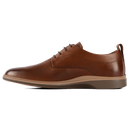
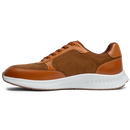
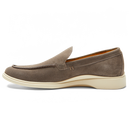
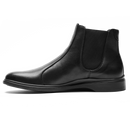


Caring for leather dress shoes correctly with the right tools and a consistent routine extends the life of full-grain leather, prevents cracking and dryness, and keeps the surface looking polished wear after wear.
There are no better upper materials than full-grain leather and Italian suede. Sustainable leather is stylish, durable, and reliable beyond compare. Yet, leather can scuff, crack, and dull with time, especially if you wear your shoes frequently or live in a wet environment. In this case, you’ll want to take exceptional care of your leather shoes.
Now, are you wondering how to care for leather dress shoes? We’ve provided the ultimate guide to help your leather shoes last years or even decades.
What to Consider Before You Buy Leather Shoes
Before you purchase and worry about caring for a pair of leather shoes, you should select the highest-quality, longest-lasting shoe possible. But which parts of the shoe should you inspect before buying? Here’s our list:
-
The Leather Upper. If you’re hoping to wear your leather shoes for a few years, you’ll need to invest in A-grade, 100% full-grain American steer leather. Thinking about suede? Look for Italian suede from Tuscany or another region of Italy that specializes in high-quality suede leathers.
- The Insole and Outsole. Too often, people buy leather shoes with insoles that offer little-to-no arch support. Not only that, but people settle for substandard outsoles without shock absorption. Look for supportive insoles and cork, rubber, or TPU outsoles that support your joint health.
- The Metals. Without strong eyelets and a shank—the metal plate traditionally found in the midsole of a leather shoe—your shoe won’t last. Check customer reviews to see if people are complaining about misshapen boots or loose eyelets.
- The Lining and Laces. A natural sheepskin lining will hug your feet better than any other shoe or sock. Leather shoe linings also help to regulate moisture within the shoe to maintain its shape and quality.
Sustainability

Amberjack's Honey Tan Chelsea Boots
While a leather shoe’s quality is paramount to its longevity, the sustainability of its resources and production is equally important.
For our collection of dress shoes, we source from an ISO-certified sustainable tannery that offers fair wages for its employees. We reduce our carbon footprint with 100% carbon neutral shipping, plastic free packaging and minimally processed natural leather; ensuring the stability and longevity of not only our leather shoes but the leather shoe industry as a whole.
Now that we’ve covered the importance of material quality and operational sustainability, it’s time to explore how to care for leather dress shoes.
How to Care for Leather Dress Shoes
We’ve broken the care and maintenance process into four main areas: cleaning, conditioning, polishing, and storing. Don’t worry! We promise it’s simpler than you might think.
|
Step |
Tool |
Frequency |
What It Does |
|
1 |
Horsehair brush |
After every wear |
Removes surface dust and debris before it works into the leather |
|
2 |
Leather conditioner |
Every 2-4 weeks |
Prevents the leather from drying out and cracking |
|
3 |
Leather shoe polish |
Monthly |
Restores color, covers scuffs, and adds a lasting shine |
|
4 |
Shoe trees (cedar) |
Whenever not worn |
Maintains the shape of the shoe and absorbs moisture |
Cleaning
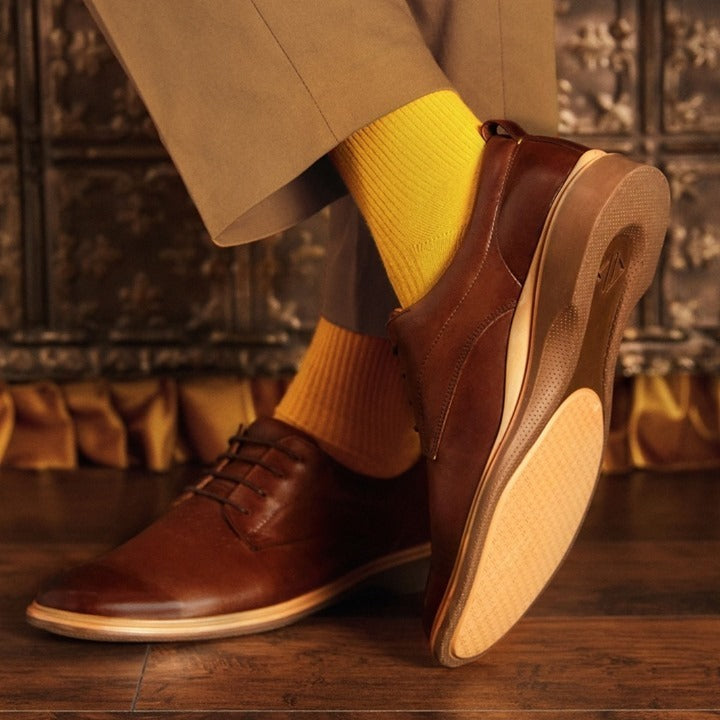
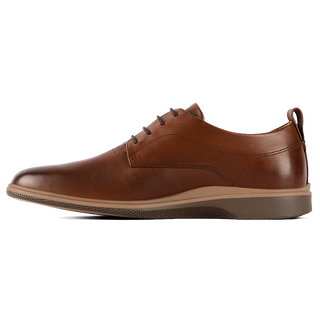
Amberjack's Chestnut Original Shoes
In many ways, cleaning leather is similar to cleaning your skin. Leather needs to be washed, moisturized, and maintained for its health and appearance.
Brush off dirt and grime from the surface of your shoe with a soft-bristle brush and warm water. Then, use a dry cloth to remove all excess water from the surface of your leather shoe before it has time to soak in. Avoid using a traditional sponge or artificial brush bristles to clean your leather, as they may seep chemicals and color into the surface of your leather shoes.
If water isn’t doing the trick, a safe foam leather cleaner and cloth or brush can help remove salt or water stains. You can also use a 2:1 ratio of water to white vinegar if tough stains persist. Before conditioning, polishing, or storing your leather shoes away, leave the shoes out to completely dry. Otherwise, mold may start growing on your leather.
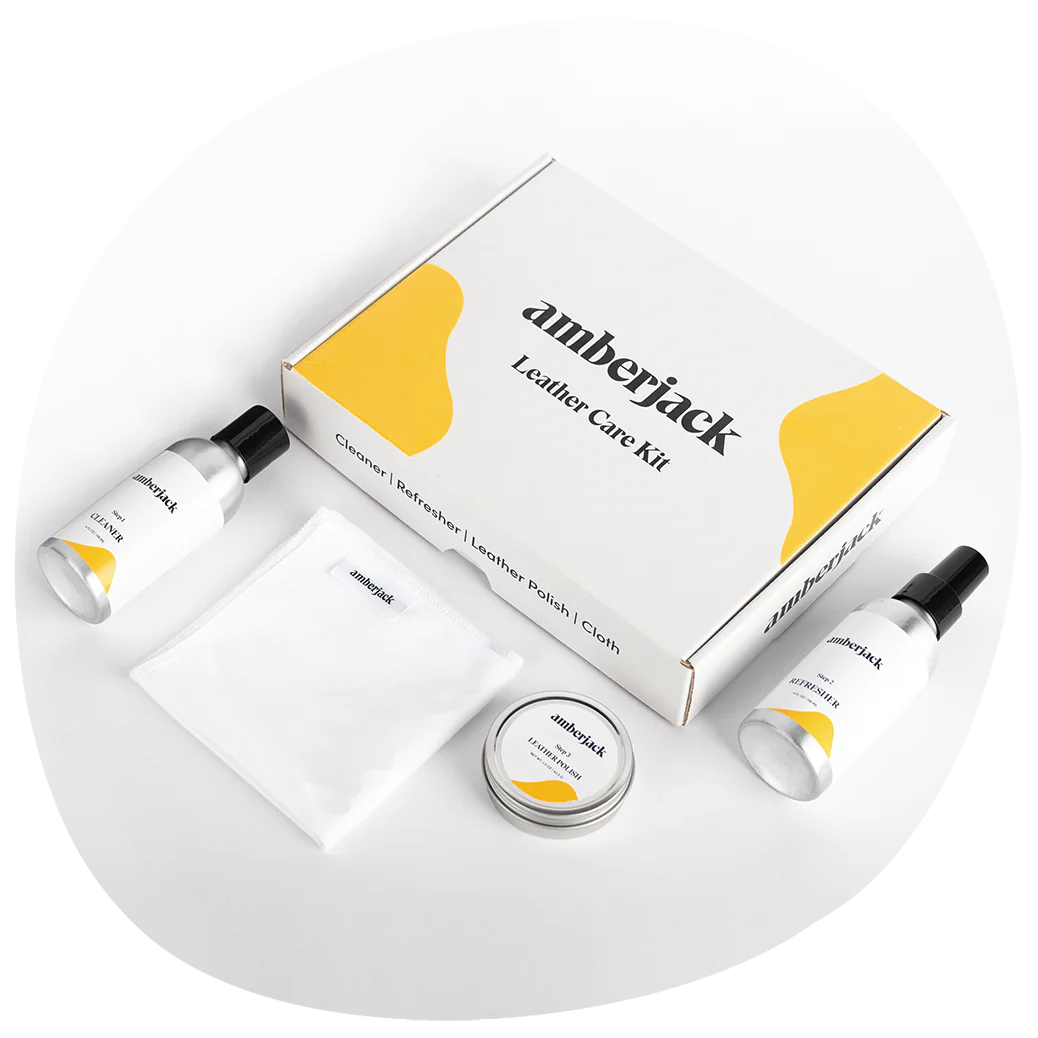
For a high-quality and simple solution, use our Leather Shoe Care Kit — made with our full-grain leather in mind. Here's what we've included in our kit:
- Leather and Sole cleaner (4 oz.) - for use on dirty or stained leather, and outsoles.
- Refresher Spray (4 oz.) - for use inside of shoes to keep them smelling fresh.
- Leather Polish (1.5 oz.) - for use on leather uppers to keep them moisturized and shining.
Conditioning

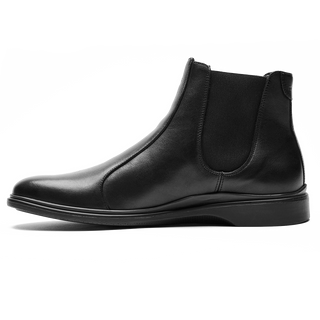
Amberjack's Midnight Chelsea Boots
Conditioning promotes healthy leather and increases the longevity of your shoes. Especially in wet, snowy, or otherwise poor conditions for your leather boots, regular shoe conditioning will protect the leather from drying out and letting harmful elements seep in.
Evenly apply a light coating of all-natural boot oil or conditioner to the surface of your shoe with a cloth, and wipe away excess moisture afterward. While some people swear by specific creams, waxes, and oils, any all-natural conditioner should do the trick.
Polishing

Amberjack's Obsidian Original Shoes
To polish your leather shoes, simply apply and buff as needed. Leather shoe polish restores superficial cracks, scuffs, and faded leather to their original state. You’ll often find matte or high-shine polishes, and some will slightly change the color of your leather shoe.
For this guide, we recommend buffing your leather shoes with a neutral cream polish to restore their natural color. Optionally, allow the cream polish to settle and continue with a wax polish to add shine to your restored leather shoes.
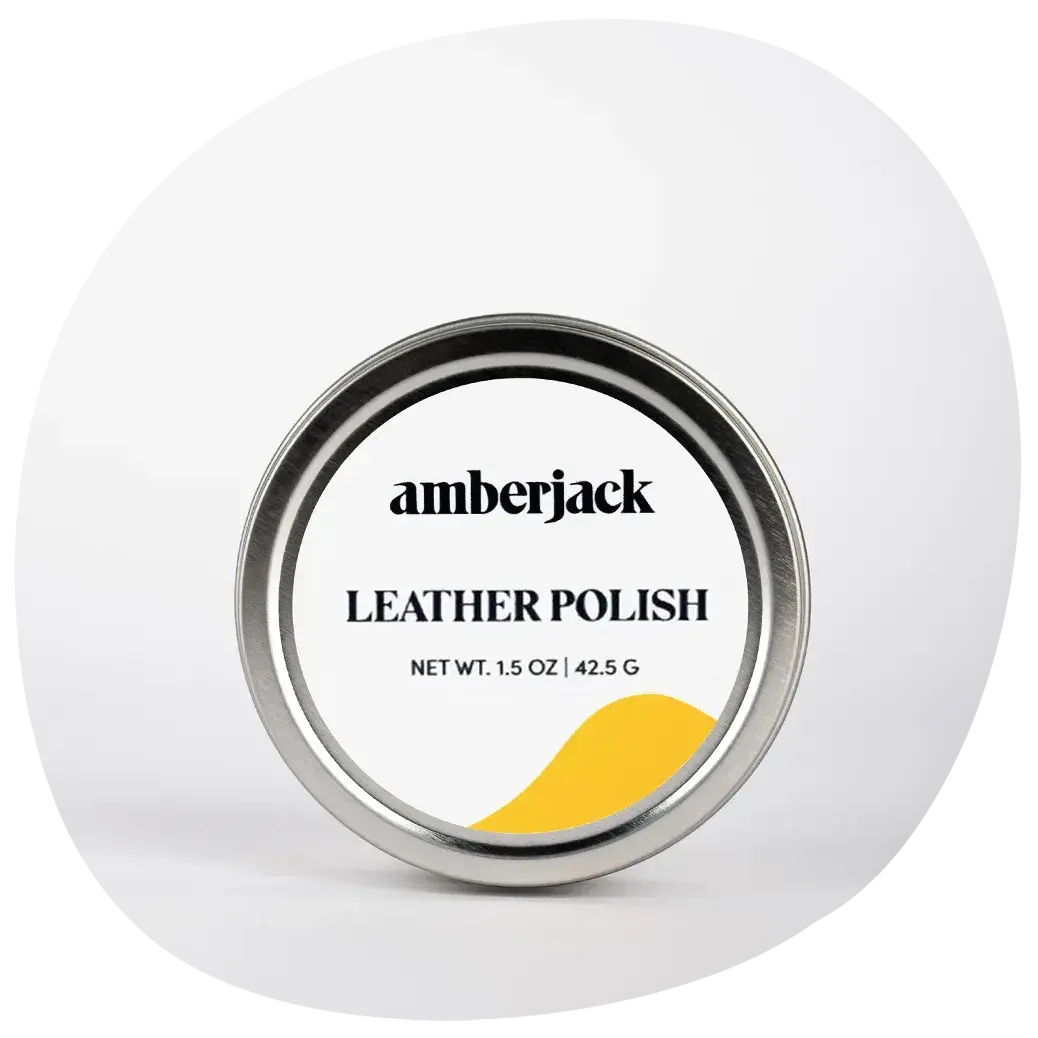
Try our leather shoe polish for a long-lasting shine you can trust with your favorite leather dress shoes.
Storing

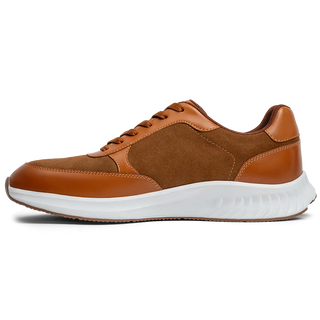
Amberjack's Chestnut Loafers
With normal wear and time, the leather of your shoe will soften and shape to the form of your foot. However, a poorly stored boot will lose its shape and become uncomfortable to wear. To avoid this, insert a cedar shoe tree into each leather shoe (if you don’t have shoe trees, some newspaper or paper stuffing from the shoes’ original packaging will work) and store your shoes in a moderately humid area outside of direct sunlight.
Shoe trees aren’t only for maintaining the shoe’s shape; the cedar has a desirable smell and natural antibacterial properties that prevent your leather shoes from crumpling at the toe. Alternatively, you can use a shoe bag to protect your shoes from indirect sunlight and dust particles.
What About Suede?

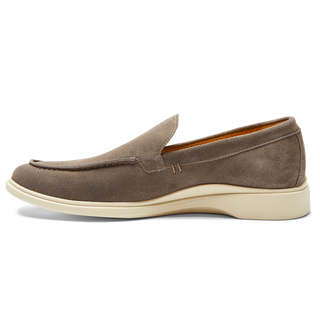
Amberjack's Stone Suede Original Shoes
Caring for suede leather dress shoes is only slightly different from caring for full-grain leather. A soft-rubber suede brush will remove dirt and other buildups without damaging the exterior. Unlike full-grain leather, you can place the suede shoes above a rolling boil of water and brush in small circles to remove tough stains. Afterward, use an absorbent cloth to remove all excess moisture.
While high-quality Italian suede is water-resistant and durable, it doesn’t hold up well against hydrophobic liquids. If suede comes into contact with oil or grease, it may spell disaster for your shoes. You may be able to remove the stain by dabbing it with talcum powder or baking soda on a soft cloth.
To store your suede dress shoes, keep them in the open air and out of direct sunlight.
Do You Have More Questions About Leather Dress Shoe Care?
At Amberjack, we’ve partnered with one of the best tanneries in the world to create unbelievably comfortable and stylish leather shoes that’ll last years and beyond. Learn more about our products, and contact our team with questions at help@amberjack.shop.
How do you care for leather dress shoes?
Caring for leather dress shoes involves four main steps: brushing off surface dust after every wear, conditioning the leather every two to four weeks to prevent drying and cracking, polishing monthly to restore color and shine, and storing with cedar shoe trees to maintain shape and absorb moisture. For full-grain leather shoes like Amberjack's Oxford and Chelsea styles, Amberjack's Leather Care Kit includes the conditioner and tools designed for their specific leather finish.
How often should you polish leather dress shoes?
Most full-grain leather dress shoes benefit from polishing once a month under regular use. If you wear a pair daily, you may want to polish every two to three weeks. Between polishes, a quick brushing with a horsehair brush after each wear removes surface grime before it sets in. Conditioning between polishes keeps the leather supple and prevents the surface from dulling or cracking.
What happens if you don't care for leather shoes?
Without regular care, leather dress shoes dry out over time. The leather surface loses its natural oils, which causes the material to crack and flake -- damage that cannot be reversed with conditioning alone once it sets in. Neglected leather also fades unevenly and loses its structure as moisture from wear is absorbed and never released. A basic care routine -- brushing, conditioning, polishing, and shoe trees -- takes less than ten minutes and extends the life of a quality pair by years.